01
Introduction to Cybersecurity
Cisco Networking Academy
What you getFree course; pass the final exam for a Credly badge
Explore resource (opens in a new tab) HACKSECURE
Don't just build. Think.
Free resources to keep building your cybersecurity skills after HackSecure 2026, until we see you at HackSecure 2027. Every resource below is free to sign up for; some charge only if you want an official exam or certificate.





Begin with one of these. Each is free and self-paced, and ends with a digital badge or certificate you can add to your CV and LinkedIn.
Cisco Networking Academy
What you getFree course; pass the final exam for a Credly badge
Explore resource (opens in a new tab)IBM SkillsBuild
What you getFree course; score 80% on the final assessment for a Credly badge
Explore resource (opens in a new tab)Fortinet Training Institute
What you getFree self-paced courses and certifications
Explore resource (opens in a new tab)Microsoft Learn
What you getFree learning path; the official exam is paid
Explore resource (opens in a new tab)Google on Coursera
What you getFree to audit; the certificate is paid
Explore resource (opens in a new tab)Tip: the ISC2 free Certified in Cybersecurity programme closed to new sign-ups in May 2026, so it isn't listed here. Free tiers change, so check each provider's page when you enrol (StationX, checked Aug 2026 (opens in a new tab)).
The best way to learn is to break things legally. All of these are free to join; some have paid tiers you don't need to start.
Best forGuided beginner rooms in the browser, no setup needed
Explore resource (opens in a new tab)Best forStructured modules, from fundamentals to penetration testing
Explore resource (opens in a new tab)Best forWeb app security labs, fully free
Explore resource (opens in a new tab)Best forCapture-the-flag puzzles for beginners, from Carnegie Mellon
Explore resource (opens in a new tab)Best forLearn the Linux command line through a wargame
Explore resource (opens in a new tab)Best forA deliberately insecure web shop to practise on safely
Explore resource (opens in a new tab)Best forBlue-team and digital forensics labs (Track 4 fans, this one's for you)
Explore resource (opens in a new tab)Best forPractise as a SOC analyst on simulated alerts
Explore resource (opens in a new tab)You met these in your canvases and pitches. They are free to read, and knowing them well sets you apart in interviews.
Use it toKnow the most common web application risks
Explore resource (opens in a new tab)Use it toSecure AI features: prompt injection, data leakage, poisoning
Explore resource (opens in a new tab)Use it toName the exact attacker techniques you defend against
Explore resource (opens in a new tab)Use it toStructure security as Govern, Identify, Protect, Detect, Respond, Recover
Explore resource (opens in a new tab)Use it toPrioritise practical safeguards, especially for small businesses (IG1)
Explore resource (opens in a new tab)Everything runs in your browser. Nothing is sent anywhere.
Think like a defender. Test what you know.
Read each message and decide: Legit or Phish?
Local sources that kept coming up in your solutions:
POPIA guidance, for any solution that handles personal data
South African banking crime statistics and scam awareness
national cyber awareness and incident guidance
0 of 4 done
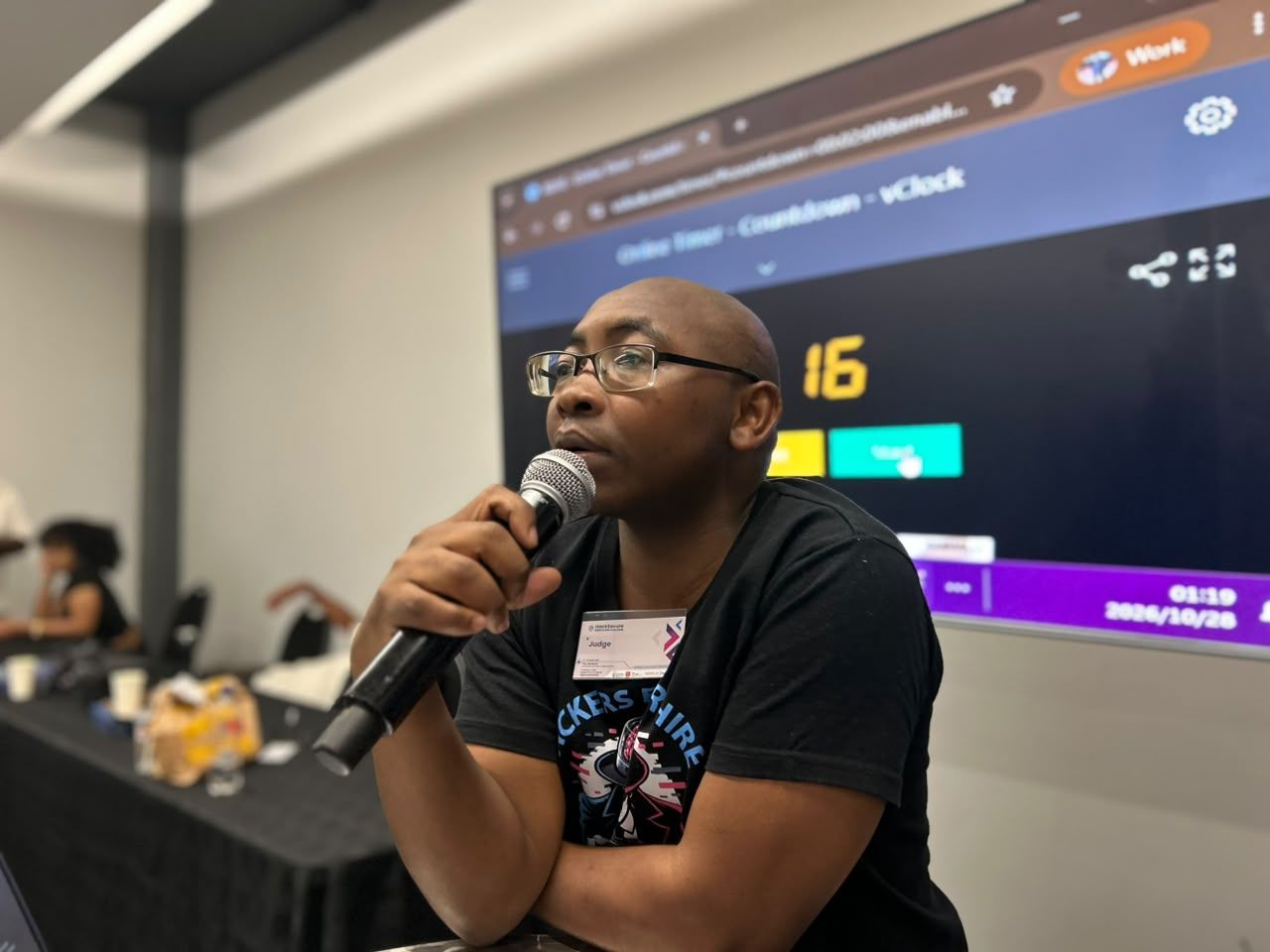
A look back at the weekend: from the opening keynote to the closing ceremony. Select any photo to view it larger.
Briefings, the clock and the pathways that framed the weekend.
Teams, laptops and long nights turning ideas into secure solutions.
Pitches done, certificates handed out, and the people who made it happen.